Why Your First Bryce Night Shoot Should Be a Guided One
You can learn the settings from this site. You cannot learn the rim in the dark from any website. A guided night tour with Bryce Canyon Stargazing is the fastest, safest way to convert your one or two dark-window nights into keeper frames.
The Math of a Short Trip
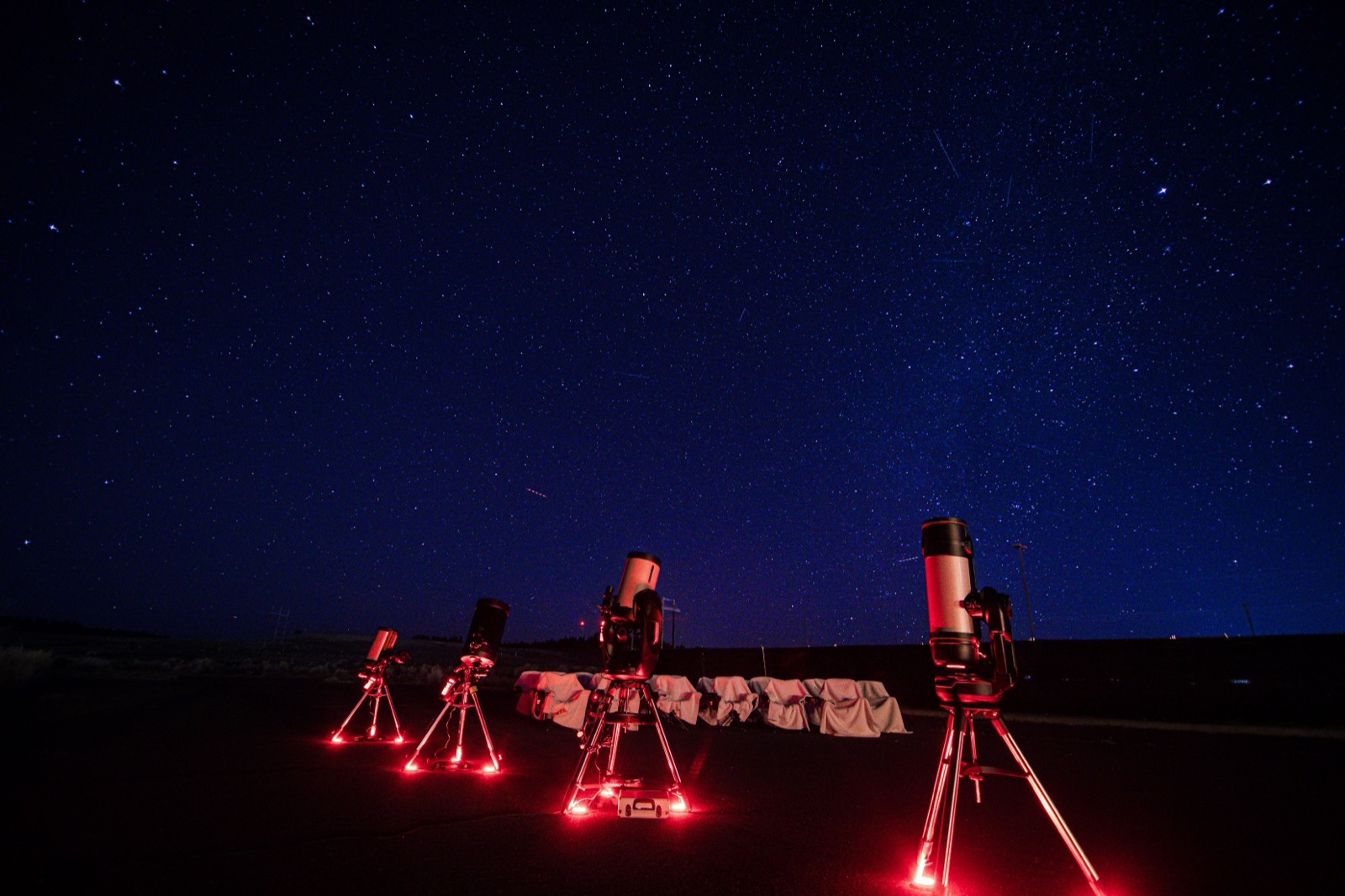
Be honest about your constraints. Most photographers get one or two moonless nights at Bryce — a road-trip stop timed against the new-moon window, with no slack for a do-over. Against that, count the failure modes of a first solo night: a viewpoint that doesn't match the core's azimuth that week, 45 minutes lost relocating in the dark, a composition you can't judge until the core is already past its best position, white-light hits from other visitors ruining your stacking burst, and the constant background tax of navigating an unfenced rim you've never seen at night.
Every one of those failure modes is something a local guide has already solved — not in theory, but because they were on the rim last night, and the night before. That is the whole value proposition: you compress weeks of trial-and-error into one guided night.
What a Guide Actually Does for a Photographer
Safe Rim Access in True Darkness
Sections of the rim are unfenced with several-hundred-foot drops, paths hold ice into late spring, and on a moonless night the edge is genuinely invisible. Guides know the safe footing, the stable tripod positions, and the routes between them — so your attention stays on the frame, not the edge.
The Right Viewpoint for Tonight
The core's position shifts week to week and hour to hour. A guide matches the night's core azimuth to the viewpoint that frames it best over the hoodoos — the decision that, more than any camera setting, determines whether you go home with the shot.
Composition Help on Location
Foreground-to-sky balance, where the Silent City silhouette reads strongest, how low to drop the horizon for a rising core — the judgment calls that take solo photographers several nights to develop, answered in minutes by someone who watches these compositions form every clear night.
Dark-Adapted Logistics
Red-light discipline for the whole group, timing around twilight and moonrise, knowing when a monsoon cell will clear versus settle in. The invisible operations layer of a productive night, handled.
The Scout-Trip Strategy
Here is how experienced photographers use a guided night, and it is the approach we recommend on every page of this site:
- Night one — guided. Join a Bryce Canyon Stargazing tour during your dark window. Bring your camera and tripod. While the guide runs the night, you learn the rim in working conditions: which overlooks are productive right now, where the safe positions are, how the sky moves over the amphitheater, what the temperature really does after midnight. Shoot the whole time.
- Between nights — plan. Review your frames. Use PhotoPills to refine the composition you found, against the core times from the season guide and the viewpoint notes in the spots guide.
- Night two — execute solo. Return to the exact position you scouted, with the route and footing already known, and spend the entire dark window on deliberate work: stacking bursts, panoramas, maybe a tracked sky.
One guided night converts your solo night from a gamble into an execution. For photographers with a single night only, the calculus is even simpler: the guided night is the productive night.
This is not a camera class you've outgrown. The tour is a guided night under Bortle 2 skies, and photographers are welcome to work throughout. You bring the technique — the guide brings the location, the safety, and the sky knowledge no app fully replaces.
Why Local Beats Remote Planning — Always
PhotoPills can tell you the core's azimuth at 12:47 a.m. It cannot tell you that the wind funnels over one overlook after midnight, that last week's storm left ice in the shaded section of the access path, that the haze from a distant fire is sitting low and will clear by 1 a.m., or that a quieter overlook fifty yards along the Rim Trail frames the Silent City better than the spot every blog names. Guides accumulate exactly this kind of perishable, hyper-local knowledge because they are out here night after night through the whole core season — and it transfers to you in the first half hour of a tour.
There is also the simple human factor: standing at an unfenced rim at 8,000 feet at 2 a.m., alone, in 28°F — most people make worse creative decisions in that state. A guided group buys you safety margin and lets you spend your attention budget on photography.
Proof From the Tour Site
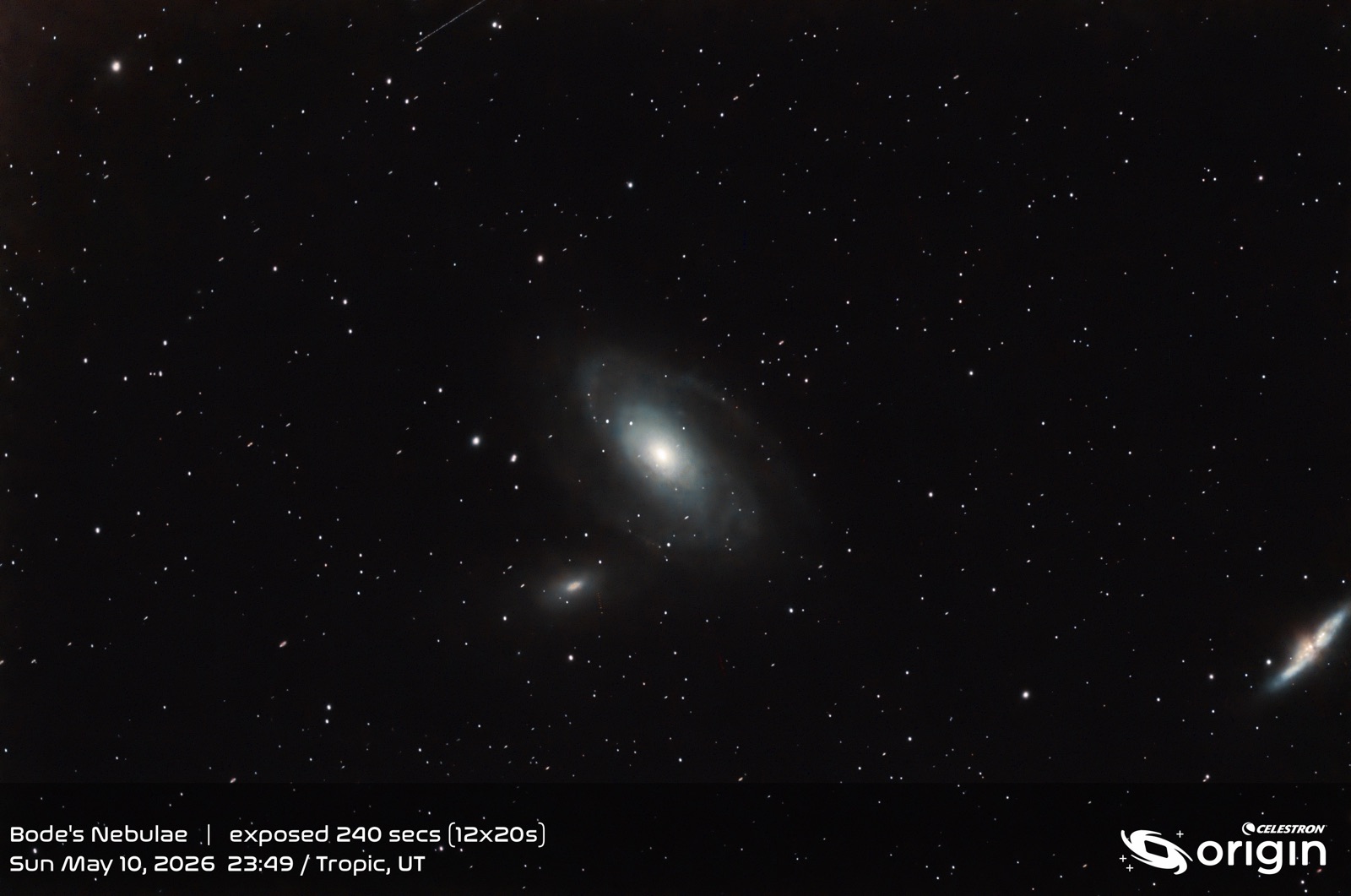
This is Bode's Galaxies (M81 and M82) — captured during a Bryce Canyon Stargazing tour in May 2025 from Tropic, Utah. Galaxies 12 million light-years away, resolved from the same dark sky your camera will see on a guided night.
When the sky is dark enough to pull structure out of galaxies tens of millions of light-years away, your 15-second Milky Way frames are operating with margin to spare.
Bring Your Kit, Bring Your Questions
Come with the full night kit — tripod, red headlamp, layers, spare batteries — and your starting exposure already memorized from the settings guide. Then use the guide ruthlessly: ask why this overlook over that one, where they'd stand in September instead of June, what the sky does after the monsoon clears. That conversation is the difference between a tourist night and a scout night.
Ready to shoot? Go with a guide who knows the rim.
Bryce Canyon Stargazing runs small-group guided night tours under some of the darkest measured skies in the country. Time your booking to the new-moon window, bring your camera, and treat it as the smartest scout trip in astrophotography.